
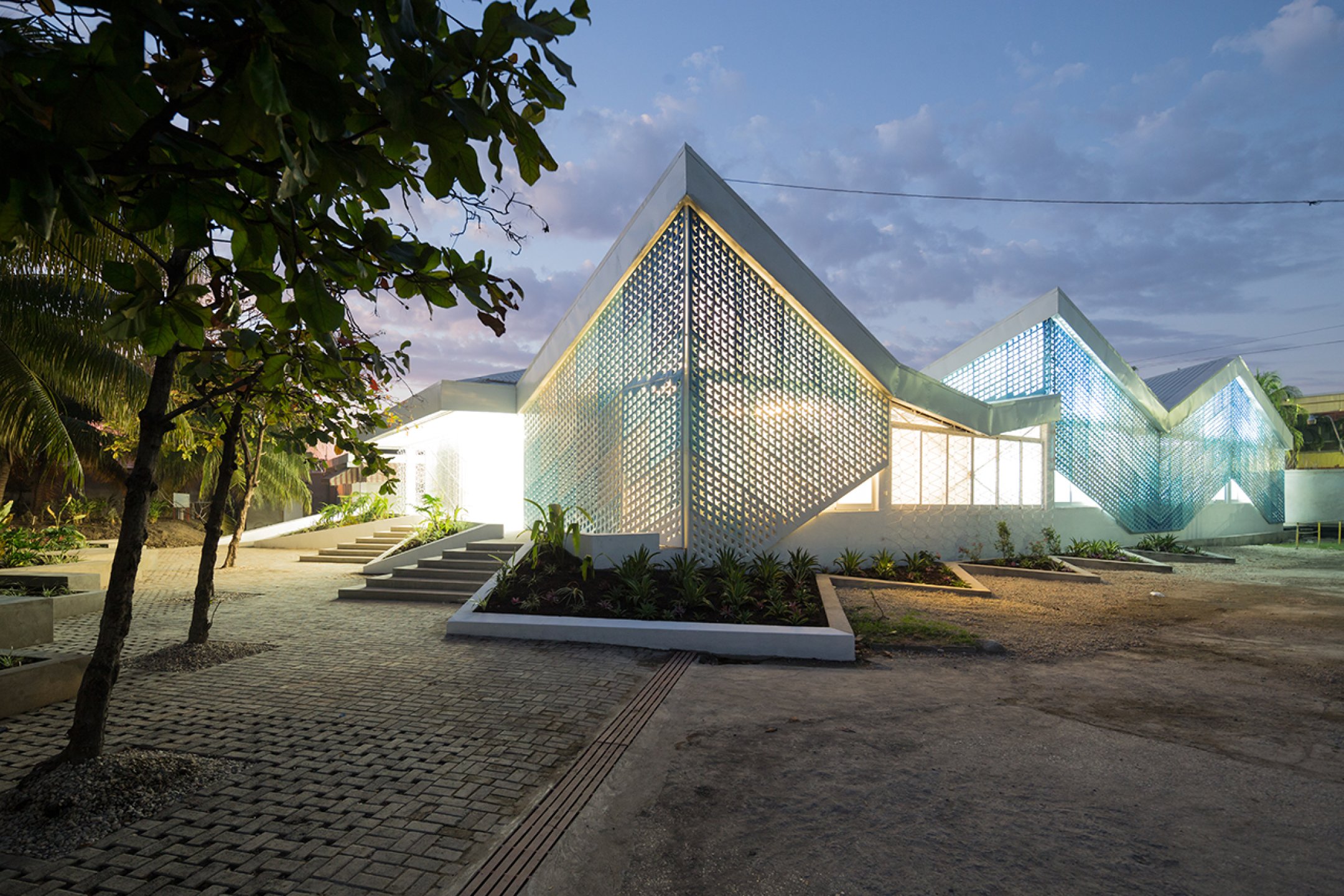
Photo of GHESKIO Cholera Treatment Center, Photo by Iwan Baan

GHESKIO Cholera Treatment Center

Year
2015
Status
Completed
Size
693 sq m
Partners
GHESKIO
Collaborators
Mazzetti, Fall Creek Engineering, Nathan King + Virginia Tech Center for Design Research, Andrea Panizzo, YCF Group, Lam Partners
Photographer
Iwan Baan
Project Team
Sierra Bainbridge, Thomas Burns, Kyle Digby, Benjamin Hartigan, Robertho Jean Noel, Alix Joseph, Michael Murphy, Alan Ricks, David Saladik, Adam Saltzman, Chris Scovel, Amie Shao
Project Team
Sierra Bainbridge, Thomas Burns, Kyle Digby, Benjamin Hartigan, Robertho Jean Noel, Alix Joseph, Michael Murphy, Alan Ricks, David Saladik, Adam Saltzman, Chris Scovel, Amie Shao

The GHESKIO Cholera Treatment Center in Haiti is a purpose-built facility that not only treats cholera patients but also prevents future outbreaks by managing wastewater on-site, combining innovative design with public health infrastructure to tackle the root causes of disease transmission.

Cholera—a curable and preventable disease that had not previously existed in Haiti—emerged in 2010 after contaminated waste was introduced into the Artibonite River, triggering a rapid outbreak. At the time, Port-au-Prince’s only waste-filtration plant had been shut down following the earthquake, while access to clean water and adequate waste treatment was severely limited.

CTC

Dr. Jean-William Pape, a Haitian infectious disease specialist, has dedicated much of his life to combating diarrheal diseases that disproportionately affect Haiti’s poor—many of whom lack access to clean water, toilets, and latrines. Amid the worst cholera outbreak in over a century, Dr. Pape challenged MASS to design a treatment center in which both the construction process and the completed facility would address the deeper structural and social conditions that allow cholera to flourish.

Photo of Gheskio Cholera Treatment Center, Photo by Iwan Baan, Exterior Nighttime View of the Cholera Treatment Center with Gatehouse

To reduce the risk of improper waste management, the CTC was designed to treat waste entirely on-site. A clerestory roof brings in natural light and captures rainwater, which is stored in underground cisterns, treated, and reused for showers and sinks. The water is also processed for use in Oral Rehydration Therapy, the primary treatment used to rehydrate patients recovering from cholera. 

gheskio
gheskio Site plan
gheskio
gheskio

The facility decontaminates waste through a leaching field combined with anaerobic baffled reactor technology, forming a critical piece of infrastructure in Port-au-Prince. It prevents infected waste from reentering the groundwater system and has the capacity to treat over 250,000 gallons of sewage per year—helping to break the cycle of reinfection.

gheskio
gheskio

Designed to accommodate up to 100 patients at a time, the building features large fans, high ceilings, and a perforated metal façade to facilitate natural airflow. Its 8,000 hand-bent apertures were digitally designed and optimized for daylighting, ventilation, and privacy—blending traditional craftsmanship with modern technology.

CTC
gheskio

MASS partnered with GHESKIO’s vocational training workshops to hire and train survivors of abuse to fabricate custom furniture for the center. These purpose-built chairs and cots replaced makeshift army cots from earlier emergency tents. The seating surfaces are removable for routine cleaning, allowing them to be safely re-used. Because of the need for routine sterilization, all materials were chosen for their durability and infection-resistant properties.

gheskio
Photo of CTC in context, Photo by Iwan Baan
Photo of GHESKIO CTC, Photo by Iwan Baan

While cholera persists in Haiti, significant progress has been made. Due to the temporary nature and limited funding of many emergency facilities, GHESKIO’s CTC is now one of the only active cholera treatment centers still operating—serving much of Port-au-Prince’s population.